

New Research Proposes ‘Regime Transition’ Instead of ‘Regime Change’ to Address the U.S.–Israel–Iran Conflict
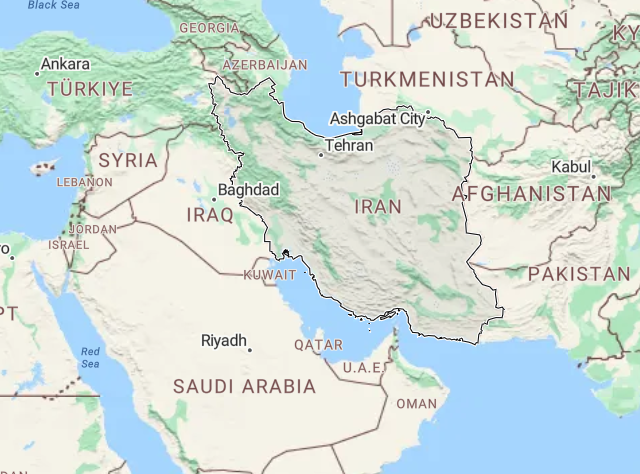
Map of Iran

President Pezeshkian
Airpower can’t achieve regime change. Keeping the regime intact is a strategic shortfall; a regime transition strategy can offer a viable war-ending outcome.
Is the republican pillar a veneer for clerical rule? Let’s invert the view: the clerical pillar is actually a hardened shell encasing a secular and democratic gem — break the shell, the gem emerges.”
CHICAGO, IL, UNITED STATES, April 6, 2026 /EINPresswire.com/ -- A newly published research paper, "Iran: Back to the Norm — For War and Peace", introduces a strategic framework that differs from the two dominant views of the ongoing Iran War: leaving the current theocratic regime intact despite an intensive U.S. and Israeli air campaign, or expecting regime change through spontaneous public unrest that has not materialized. The research presents a third outcome — Regime Transition — which examines how Iran's existing republican institutions could play a pivotal role in providing a viable exit ramp for the war and shaping future Iranian political trajectory.— Doc Ngu
The "Iran: Back to the Norm" (IBN) strategy identifies Iran as a hybrid state composed of a Theocratic Pillar — comprising the Supreme Leader, clerical oversight bodies, and IRGC and Basij praetorian forces — and a subordinate Republican Pillar with an elected president, ministries, and parliament. The paper notes that both the air campaign and the diverse Iranian opposition view the Republican Pillar as an administrative veneer to the Theocratic Pillar, and cannot be regarded as a credible negotiating partner. The paper takes an opposite viewpoint.
STRATEGY DEFINED
The paper presents the IBN strategy as a Regime Transition and distinguishes it from the traditional regime change, in which both pillars of the state are to be dismantled. According to the paper, the goal of the IBN-induced Regime Transition is to dismantle only the Theocratic Pillar and concurrently elevate the Republican Pillar as the sole representative of Iran. The main argument presented is that the Republican Pillar has functioned for decades as a partial democracy with recurring presidential and parliamentary elections and would provide continuity and stability toward a full democracy in a Republic without the power vacuum associated with a sudden regime collapse.
The paper then argues that the prospect of a Republic that guarantees first-class citizenship for all ethnic and religious minorities could be a unifying rally cry for all opposition groups and urban protesters to demand the dismantling of the Theocratic Pillar.
The third mentioned argument is that the Republican Pillar could enlist the national armed and police forces to support the protests against the praetorian elements of the Theocratic Pillar.
STRATEGY IMPLEMENTATION
The second part of the paper explores how the Regime Transition can take place. For the U.S. and Israel, the paper proposes a switch from focusing on high-level decapitation to making all institutional levels of the Theocratic Pillar irrelevant. The paper further suggests a shift in international recognition, where the global community ceases contact with the theocratic leadership and recognizes the republican presidency as the sole legitimate authority. The paper recognizes that pressured irrelevancy and diplomatic isolation will not, by themselves, be enough to dismantle the Theocratic Pillar, and that people on the ground will be needed.
Instead of calling for U.S. or Israeli ground troop deployments — which would impose significant human and political costs on both countries — or relying on spontaneous, unarmed civilian uprisings, the paper outlines a civil–military coordination framework, in which simultaneous protest marches in major Iranian cities are planned and synchronized with U.S. and Israeli high-altitude airpower, low-altitude autonomous and first-person-view drones, armed opposition groups, and potential participation by elements of the national armed and security forces that break with the regime.
The paper concludes the IBN strategy with a "no-reprisals" policy against the dismantled Theocratic Pillar, with clerical figures returning to religious roles and IRGC-linked enterprises continuing to operate to fund the salaries of disarmed praetorian members during the transition to a post-sanctions economy under the new Republic.
ABOUT THE PAPER
The research offers a timely strategic alternative to the military situation in Iran, its regional spillover into neighboring Middle Eastern states, and ongoing developments in the Strait of Hormuz. The full paper, "Iran: Back to the Norm — For War and Peace", is available for public review on Substack:
https://docngu.substack.com/p/iran-back-to-the-norm-for-war-and
ABOUT THE AUTHOR:
Doc Ngu writes about novel solutions to the world's most intractable conflicts. His first book offers the PEIS Plan, a three-state, triple-win solution for the Israeli-Palestinian Conflict. His second book presents the CURD Plan, an 18-point, double-victory peace plan to end the Russo-Ukrainian War. Follow Doc Ngu on words.docngu.net.
Doc Ngu
Bama Vacon Publishing
contact@bamavacon.com
Visit us on social media:
LinkedIn
Facebook
X
Legal Disclaimer:
EIN Presswire provides this news content "as is" without warranty of any kind. We do not accept any responsibility or liability for the accuracy, content, images, videos, licenses, completeness, legality, or reliability of the information contained in this article. If you have any complaints or copyright issues related to this article, kindly contact the author above.
